How to Winterize Outdoor Plumbing in New Jersey
New Jersey's freeze line hits hard in December. Here's how to winterize outdoor plumbing in New Jersey so hose bibs, sprinklers, and exposed pipes survive the winter.
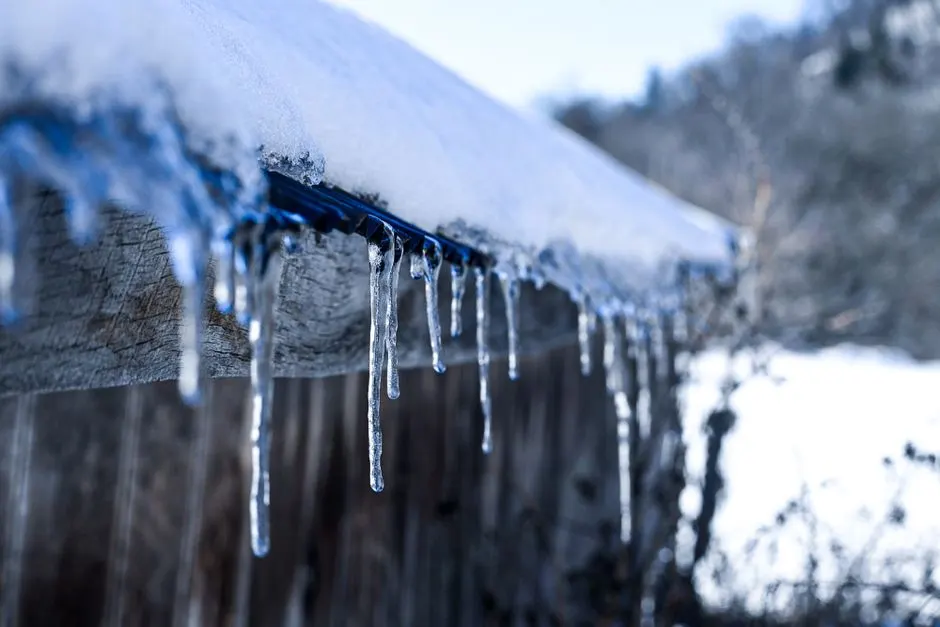
Winterizing outdoor plumbing in New Jersey means shutting off the water supply to every exterior faucet, draining the lines and fixtures, blowing out the sprinkler system with compressed air, and insulating any exposed pipe that stays pressurized through the winter. Done correctly, it takes two to four hours for a typical single-family home and prevents the freeze damage that sends thousands of NJ homeowners to the phone every January.
New Jersey sits in USDA hardiness zones 6a through 7b, which means ground temperatures in most of the state drop below the 20°F threshold that splits copper and bursts PVC. The rest of this post walks through exactly when to start, how to do each step, what it costs in 2026, and when to stop and call us instead.
Why New Jersey Outdoor Plumbing Freezes So Fast
Outdoor plumbing in New Jersey freezes faster than indoor plumbing because exterior hose bibs, irrigation lines, and pool feeds sit above the frost line with no conditioned air around them. Water expands roughly 9% when it turns to ice, and that expansion is what cracks a copper ½-inch line at around 2,000 psi of internal pressure.
A few things make New Jersey worse than its neighbors. The state's freeze-thaw cycles swing 25 to 35 degrees in a single day from late November through March, so a line can thaw and refreeze three or four times in a week. Older housing stock in cities like Plumbing in Trenton and Plumbing in Paterson often has original 1960s or 1970s hose bibs that were never frost-proof to begin with. And the coastal counties - Monmouth, Ocean, Atlantic - get salt air that corrodes the valve seat, so a bib that looks fine in October can fail the first hard freeze in December.
If you want the full picture of how we handle a frozen or split line, our team covers frozen pipe repair New Jersey calls all winter, usually within a couple of hours of the first call.
When to Winterize Outdoor Faucets in NJ
The right window to winterize outdoor faucets in NJ is the last two weeks of October through the first week of November. By the second week of November, overnight lows in Sussex, Warren, and Passaic counties routinely hit 28°F, and a single night at that temperature is enough to crack a hose bib that still has water in it.
Here's the schedule we give our customers:
- Late September: stop watering the lawn, let the irrigation system run dry for the season.
- First week of October: disconnect every garden hose, drain it, and store it indoors or in a garage.
- Mid-to-late October: shut off the interior valve feeding each hose bib, open the exterior spigot to drain, and blow out the sprinkler system.
- First week of November: final walk-around - check pool lines, outdoor kitchens, and any exposed pipe in an unheated crawl space or garage.
If you missed that window and it's already mid-November, don't wait. A 30-minute hose bib winterization New Jersey job today is cheaper than a $600 to $1,400 emergency repair in January.
Step-by-Step: How to Winterize Outdoor Plumbing in New Jersey
Here is the exact sequence we run on every winterization call, in order. Skipping a step is how most freeze damage happens.
1. Locate the interior shut-off valve for each hose bib
Most NJ homes have a dedicated stop-and-waste valve inside the basement or crawl space, usually within six feet of where the exterior line enters the wall. Turn it clockwise until it stops. If you can't find one, the bib is likely a frost-free model that drains itself - but only if the hose is removed.
2. Open the exterior spigot and let it drain
With the interior valve closed, open the outdoor spigot and leave it open for the winter. Any residual water in the line will drain out through the stop-and-waste port. If nothing comes out, the valve may be stuck - that's a sign to call us before the first freeze.
3. Disconnect and drain every hose
A hose left connected to a frost-free bib traps water in the valve body and defeats the entire design. Coil hoses, drain them fully, and store them inside. This one step prevents more winter damage than any other.
4. Blow out the irrigation system
We'll cover this in detail below, but the short version: a 20 to 30 CFM compressor at 50 to 80 psi, run zone by zone until nothing but air comes out of the last head.
5. Insulate exposed pipe
Any pipe in an unheated garage, crawl space, or along an exterior wall gets foam pipe insulation with a wall thickness of at least ½ inch. For outdoor pipe insulation NJ jobs, we use closed-cell foam with an R-value of 4 to 6 per inch and tape every seam.
6. Shut down and drain pool and outdoor kitchen lines
Pool pumps, heaters, and outdoor sink lines all need the same treatment. Drain the filter, blow the return lines, and add antifreeze to any trap that can't be fully drained.
Sprinkler Winterization in NJ: What a Proper Blowout Looks Like
Sprinkler winterization in NJ is not a five-minute job. A proper blowout uses a tow-behind or truck-mounted compressor rated at 20 to 30 CFM, connected to the system through a quick-connect fitting at the backflow preventer.
The technician opens one zone at a time, lets the pressure build to 50 to 80 psi, and runs the zone until the last head sputters and then blows dry air. Then the zone is closed and the next one opens. A six-zone system takes 45 to 75 minutes. A twelve-zone system can take two hours.
Two things we see done wrong constantly: homeowners using a small shop compressor that can't move enough CFM to clear the lines, and skipping the backflow preventer, which then cracks over the winter and costs $250 to $500 to replace in the spring. If you have a backflow assembly, it needs to be drained and, in most NJ municipalities, the test tag removed and stored indoors.
Typical 2026 sprinkler system winterization cost in NJ runs $85 to $175 for a standard residential system, and $200 to $350 for larger properties with eight or more zones. That's a fraction of what a cracked mainline costs to dig up and replace.
How to Prevent Outdoor Pipes From Freezing in New Jersey
Preventing outdoor pipes from freezing in New Jersey comes down to three things: get the water out, keep the cold air away from what's left, and know where your shut-offs are before you need them.
Beyond the standard winterization steps, here's what actually moves the needle:
- Heat tape on any pipe that stays pressurized. Self-regulating heat cable draws about 3 to 8 watts per foot and keeps a line above 40°F in ambient temperatures down to -10°F.
- Frost-free hose bibs. If your home still has a standard bib, replacing it with a frost-free model costs $150 to $325 installed and eliminates the problem for good.
- Insulated covers on exterior spigots. A $10 foam cover on a bib that can't be shut off from inside is cheap insurance.
- Drip a faucet on the coldest nights. If you have an interior line running along an exterior wall, a pencil-thin drip keeps water moving and buys you 10 to 15 degrees of margin.
We install frost-free bibs and heat cable across the state, and our crews handle Plumbing in Newark and the surrounding Essex County towns where pre-war housing stock makes exposed exterior runs common.
Common Winterization Mistakes We See Every November
The same handful of mistakes cause most of the frozen-pipe calls we run from December through March. Watch for these on your own property.
- Leaving the hose connected. This is the number one cause of split frost-free bibs. The valve can't drain if the hose is capping it.
- Closing the exterior spigot after draining. Leave it open all winter so any residual water has somewhere to go.
- Skipping the sprinkler blowout because "it's a mild year." A single 22°F night in Vineland or Toms River is enough to crack a zone line.
- Using the wrong compressor. A 6-gallon pancake compressor cannot clear a 1-inch mainline. You need volume, not just pressure.
- Forgetting the pool and outdoor kitchen. Pool heaters, salt cells, and outdoor sink traps all hold water.
- Not knowing where the main shut-off is. When a pipe bursts at 2 a.m., you have minutes, not hours.
If you're not sure whether a line is fully drained, our team can inspect it. We handle water leak repair New Jersey calls year-round and see the same freeze patterns every winter.
What Happens If Outdoor Pipes Freeze in New Jersey
When an outdoor pipe freezes in New Jersey, the water inside expands by about 9% and pushes outward against the pipe wall. Copper splits first, usually at a joint or a 90-degree elbow. PEX flexes further and often survives a single freeze, but repeated freeze-thaw cycles in the same spot will fatigue it and cause a pinhole leak by February.
The damage usually isn't visible until the thaw. That's when the split opens up, water pours into the wall cavity or crawl space, and you're looking at $600 to $1,400 for a straightforward burst pipe repair, or $2,500 to $6,000 if the water reaches drywall, insulation, and flooring.
Signs you have a frozen line right now:
- No water at one fixture while others work fine
- Frost visible on the pipe or on the wall behind it
- A faint hissing or dripping sound near an exterior wall
- Water stains on the ceiling below an upstairs bathroom
If you see any of these, shut off the main and call us. Thawing a line with a torch or a heat gun is how house fires start. We use controlled heat and infrared to thaw safely and check for splits before we leave.
When to Call a Professional
Call a professional if you can't find the interior shut-off for a hose bib, if the stop-and-waste valve won't close, if your sprinkler system has more than four zones, or if any pipe in the system is already showing frost or a bulge. Those are the situations where a DIY attempt turns a $150 winterization into a $1,200 repair.
At NJ Plumbing Pros, we run winterization calls across the state every October and November. We shut off the supply, drain every line, blow out the irrigation, insulate what stays pressurized, and leave you a written map of where every shut-off is. If something does freeze, we're set up for same-day thaw and repair.
For a broader look at what we handle year-round, see our Plumbing in New Jersey services.
Frequently Asked Questions
How do I winterize outdoor plumbing in New Jersey?
Shut off the interior valve feeding each hose bib, open the exterior spigot to drain, disconnect and store all hoses, blow out the irrigation system with a 20 to 30 CFM compressor, and insulate any pipe that stays pressurized. The whole job takes two to four hours on a typical NJ home.
When should I winterize my outdoor faucets in NJ?
Mid-to-late October, before the first overnight low below 28°F. In northern counties like Sussex and Passaic, that can happen by the second week of November. Coastal and southern counties usually have until Thanksgiving, but earlier is always safer.
What happens if outdoor pipes freeze in New Jersey?
Water expands about 9% as it turns to ice, which splits copper at joints and elbows. The damage usually shows up during the thaw, when the split opens and water enters the wall or crawl space. Repairs run $600 to $1,400 for a simple burst, more if water reaches drywall.
How much does sprinkler winterization cost in NJ?
Typical 2026 pricing is $85 to $175 for a standard residential system with four to six zones, and $200 to $350 for larger properties with eight or more zones. That includes the compressor blowout, backflow drain, and a zone-by-zone check.
Who do I call for frozen outdoor pipes in New Jersey?
Call a licensed NJ plumber - not a handyman. Thawing a frozen line with an open flame is a leading cause of winter house fires. We thaw with controlled heat, inspect for splits, and repair on the same visit.
Get Help With Plumbing in New Jersey
One cold night is all it takes to turn a $150 winterization into a $1,400 repair. Get your outdoor plumbing shut down and drained before the first hard freeze.
Call NJ Plumbing Pros at (201) 555-0123 to schedule your winterization or to get a frozen line thawed and repaired today.